
Mission
To consistently deliver innovative and competitive solutions that create value for our clients, employees, shareholders, and society.
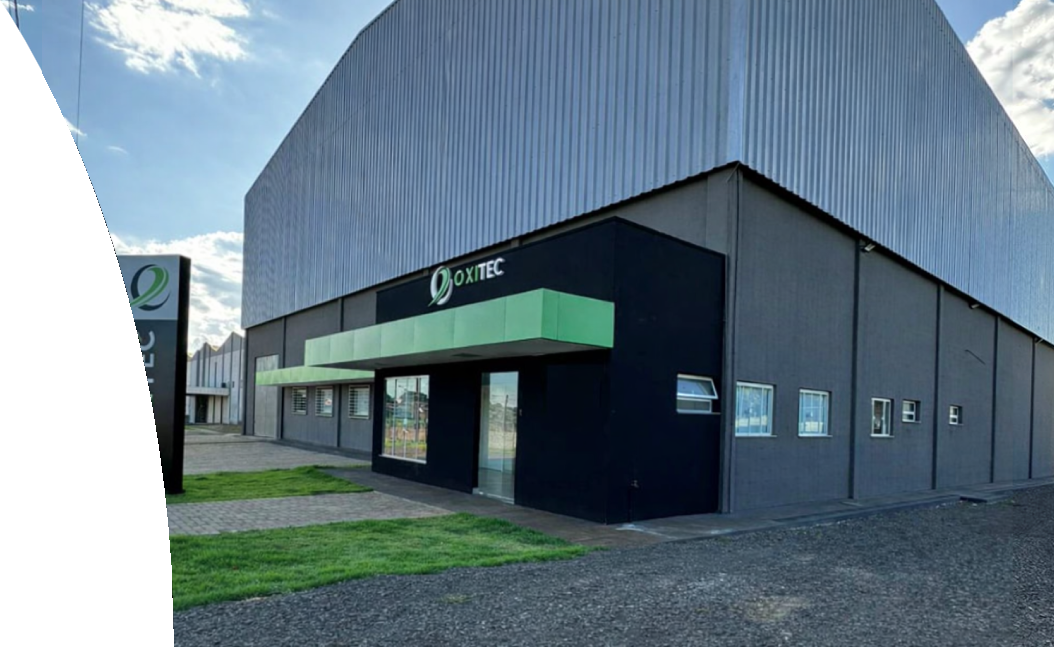
Oxitec is a technology company that transforms industrial by-products into sustainable and cost-effective solutions for the rubber industry. Today, Oxitec operates two industrial production plants in southern Brazil and has activities across the Globe.
Its flagship product, OxiRubber, is a sustainable performance blend designed to partially or fully replace zinc oxide (ZnO) in rubber compounds — a material widely used in the industry but known to cause environmental concerns. By replacing ZnO, OxiRubber delivers a highly cost-efficient solution while maintaining industrial performance and significantly reducing environmental impact and emissions.
To consistently deliver innovative and competitive solutions that create value for our clients, employees, shareholders, and society.
To be recognized for excellence in technology, sustainability, and the quality of our products and services, achieving consistent and sustainable results.
Integrity, commitment and excellence.

This section highlights OxiRubber through measurable impact: lower cradle-to-gate emissions and strong zinc-migration performance.
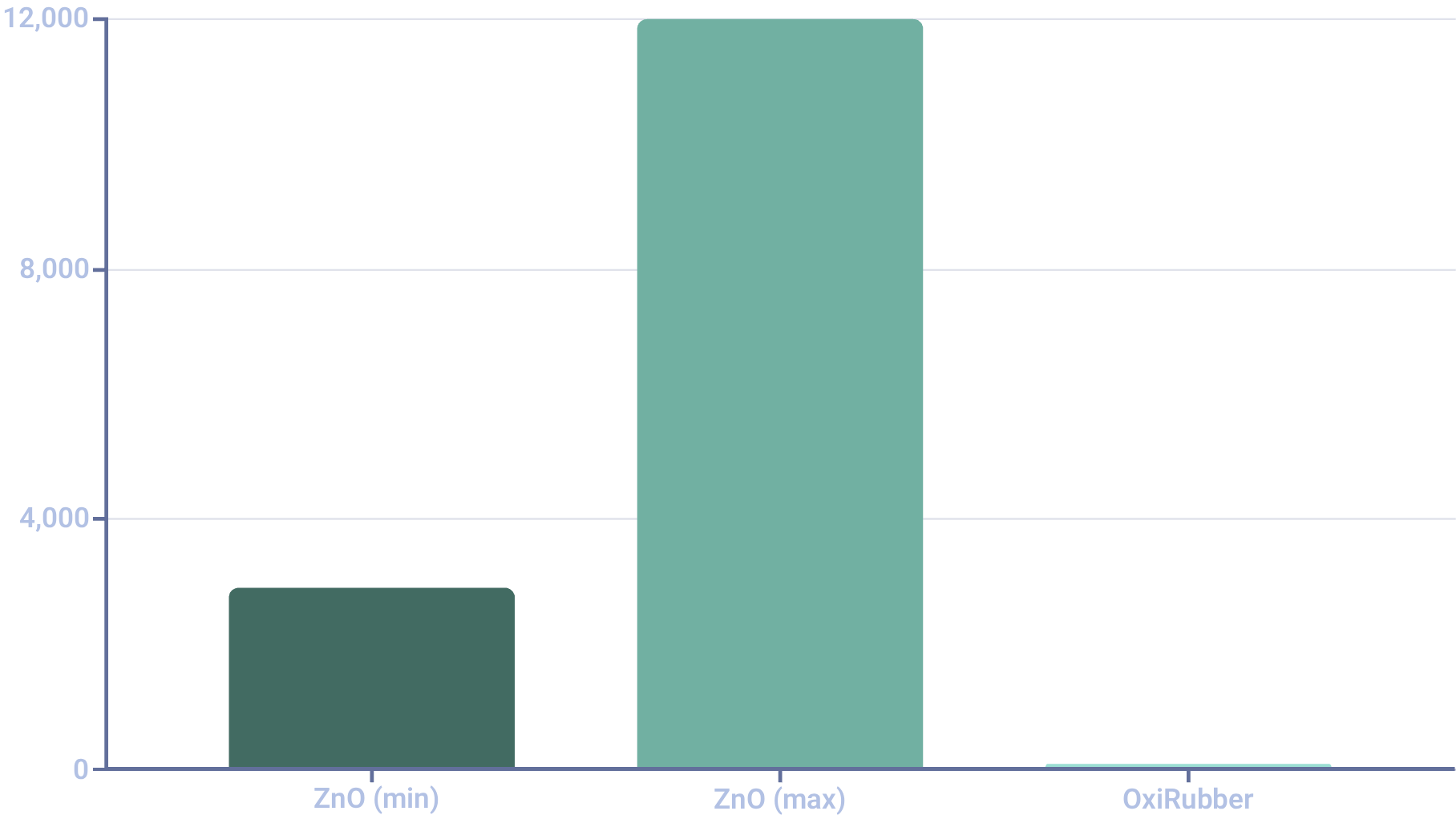
ZnO production is carbon-intensive, especially when it involves primary zinc. Studies indicate emissions between 2.9 and 12 kg CO₂e per kg of ZnO, depending on the energy source and feedstock. In contrast, OxiRubber has a drastically lower carbon footprint, with only 73.7 kg CO₂e per ton, due to its innovative production route that harnesses industrial waste.
High performance with a more sustainable approach
ZnO replacement with
OxiRubber
reduction in Zn2+
migration
Zinc migration was quantified using Inductively Coupled Plasma Optical Emission Spectroscopy (ICP-OES), measuring Zn²⁺ release into water following controlled curing, extraction, and digestion. Replacing 25–50% of ZnO with OxiRubber maintains performance while achieving up to 71% reduction in Zn²⁺ migration, confirming a viable and more sustainable alternative to ZnO.
*Study reference: ACE Test Report – A26-1998-002R, Zinc Migration Testing.
Initial product showcase prepared with a clean, high-contrast presentation aligned with the visual direction requested for the project.

Sustainable Substitute for Zinc Oxide
For over 100 years, zinc oxide has been the primary vulcanization activator in the global rubber industry.
OxiRubber enters the market as a sustainable alternative, offering ecological, technical, and economic advantages.
Some advantages of using it:
OxiRubber is: